
Indian benchmark indices Sensex and Nifty saw a significant rebound in early trade, driven by softer-than-expected US inflation data which has reinforced expectations of a less aggressive monetary policy stance from the Federal Reserve, providing relief to global risk assets.

Indian benchmark indices, Sensex and Nifty, recorded their fourth consecutive day of losses, driven by relentless foreign institutional investor (FII) outflows, rising bond yields, and a significant surge in crude oil prices, impacting overall investor sentiment.
Indian stock markets witnessed a significant rally, with the Sensex climbing 964.58 points and the Nifty reaching 24,330, driven by strong buying in blue-chip stocks, particularly in the IT and banking sectors, amidst optimism over Q1 earnings and a shift towards large-cap investments.

Indian benchmark indices, Sensex and Nifty, opened higher on Friday, primarily driven by a significant surge in Bajaj Finance shares following its strong Q1 FY27 earnings report, coupled with continued foreign fund inflows and a dip in crude oil prices. Track Sensex, Nifty on July 31.

The Nifty's stunning 200-point jump in the final minute of trading wasn't a glitch. It marked India's shift to a new, globally accepted system of end-of-day price discovery.

Indian stock markets closed lower, with the Sensex falling 429 points, after the Reserve Bank of India raised its benchmark interest rate for the first time in nearly four years, coupled with rising crude oil prices and persistent foreign fund outflows.
Indian stock markets experienced a significant downturn, with the Sensex plunging 1,124 points to a six-month low and the Nifty closing below 22,800, driven by surging crude oil prices, escalating geopolitical uncertainties, and weak global market trends.
Indian benchmark indices, Sensex and Nifty, ended marginally lower after recovering from sharp intraday losses, driven by cooling crude oil prices and buying interest in HDFC Bank and IT sector stocks.

Analysts predict that the Reserve Bank of India's interest rate decision, crude oil prices, and global bond yields will be the primary factors influencing the Indian stock market this week, alongside macroeconomic data and foreign investor activity.

Indian benchmark indices Sensex and Nifty experienced a significant slump in early trade, driven by escalating tensions in West Asia and a sharp rise in crude oil prices, alongside a bearish trend in other Asian markets.

Indian benchmark indices, Sensex and Nifty, experienced a significant downturn, with Sensex tanking 778 points and Nifty closing at a five-month low, driven by surging crude oil prices, geopolitical tensions, and fears of further interest rate hikes by major central banks.

Indian benchmark indices, Sensex and Nifty, staged a moderate rebound after a significant correction in the previous session, driven by foreign fund inflows and a largely positive trend in global markets, though geopolitical tensions between the US and Iran continued to foster caution.
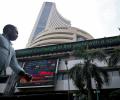
Indian benchmark indices, Sensex and Nifty, saw early gains, primarily driven by IT stocks, amidst expectations of a less aggressive monetary policy from the US Federal Reserve following softer inflation data. Global market trends and upcoming Q1 results are also influencing investor sentiment. Track Sensex, Nifty on july 16.

Indian benchmark indices Sensex and Nifty rebounded in early trade on Thursday, recovering from a sharp fall in the previous session, driven by foreign fund inflows and buying in key blue-chip stocks. Track Sensex, Nifty on July 9, 2026.
Indian benchmark indices Sensex and Nifty saw a significant rebound in early trade, driven by a sharp decline in crude oil prices and easing geopolitical tensions in the West Asia, which improved market sentiment and reduced inflation fears. Track Sensex, Nifty on July 27.

State Bank of India (SBI) and Housing Development Finance Corporation (HDFC) will see maximum inflows from passive trackers on account of the quarterly rebalancing exercise of the National Stock Exchange Nifty Bank Index. IndusInd Bank and AU Small Finance Bank could see maximum outflows. The rejig of the Nifty CPSE Index will result in inflows in Oil and Natural Gas Corporation, NTPC, and Coal India and maximum outflows in Bharat Electronics, according to Brian Freitas, a New Zealand-based analyst with Periscope Analytics.

Indian benchmark equity indices, Sensex and Nifty, extended their winning streak for a third consecutive day, driven by a rally in IT stocks and global cues suggesting a more accommodative monetary policy after softer-than-expected US jobs data.

Indian benchmark indices, Sensex and Nifty, experienced a decline in early trade due to uncertainty surrounding the upcoming US-Iran negotiations in Doha. Foreign fund outflows and a dip in major IT stocks further contributed to the market's cautious sentiment, despite mixed performance in global markets.
Indian benchmark indices, Sensex and Nifty, closed lower due to profit-taking after a four-day rally, influenced by weakness in Asian markets, with Trent shares tumbling over 12 per cent.

Indian benchmark indices Sensex and Nifty rebounded in early trade, recovering from previous losses, driven by softening crude oil prices and renewed buying interest in blue-chip stocks. Analysts note that the fall in Brent crude below USD 77 has removed significant macro headwinds for India, contributing to market stability.

Indian benchmark indices, Sensex and Nifty, experienced subdued trading and turned flat on Tuesday as investors engaged in profit-booking following a recent rally, compounded by weak Asian market trends and fresh foreign fund outflows.

Indian markets on Dalal Street rallied sharply as easing tensions in the US-Iran conflict and stable oil prices boosted sentiment. Track Nifty 50 and BSE Sensex performance and key global triggers.

Indian benchmark indices Sensex and Nifty closed lower in a volatile session due to profit-taking in banking and financial shares, despite earlier gains driven by easing geopolitical tensions. Analysts suggest investors remain cautious and are not aggressively chasing the recent rally.
Indian benchmark indices Sensex and Nifty recovered early losses to trade higher, supported by encouraging developments on the geopolitical front, specifically the US-Iran peace deal, and easing crude oil prices.

Market benchmark indices Sensex and Nifty drifted lower in early trade on Monday amid renewed hostilities between the US and Iran. The 30-share BSE Sensex declined 63.65 points to 77,047.63 during initial trading. The 50-share NSE Nifty went marginally up by 16.55 points to 24,070.20. Later, the BSE benchmark dropped 246.54 points to 76,853.93, and the Nifty dipped 50.55 points to 24,005.45. Track Sensex, Nifty on June 29.
Indian benchmark indices, Sensex and Nifty, closed marginally lower due to elevated crude oil prices, fresh US-Iran tensions, and expectations of a tighter monetary policy from the US Federal Reserve, despite strong domestic GDP growth.
Indian benchmark indices Sensex and Nifty experienced a significant decline in early trade, driven by renewed tensions between the US and Iran and a subsequent spike in global crude oil prices, creating uncertainty in the market. Track Sensex, Nifty on July 8.

Indian benchmark indices Sensex and Nifty closed flat, paring early gains due to renewed hostilities between the US and Iran, which unsettled investor sentiment and led to profit booking in metal, oil & gas, and telecom shares.

Indian benchmark indices Sensex and Nifty climbed in early trade, driven by buying in blue-chip stocks like Reliance Industries and ICICI Bank, alongside a notable cooling in crude oil prices.
The benchmark Sensex plummeted 813 points to a three-month low, with the Nifty settling below 23,450, as escalating tensions in West Asia drove crude oil prices above USD 100 per barrel, leading to widespread selling in IT, FMCG, financial services, and oil & gas shares.

Indian stock market benchmark indices Sensex and Nifty rebounded in early trade, driven by a decline in crude oil prices, supportive global cues, fresh foreign fund inflows, and buying in blue-chips like Reliance Industries and HDFC Bank. Track Sensex, Nifty movement on June 22, 2026.

Indian benchmark indices Sensex and Nifty rallied in early trade, driven by a significant decline in Brent crude oil prices, which fell below the USD 73 per barrel level, and positive trends observed across most Asian equities.
Indian benchmark indices Sensex and Nifty surged in early trade, driven by a rally in IT stocks and tempered expectations of US Federal Reserve monetary tightening following softer-than-expected US jobs data. Track Sensex, Nifty on July 3.

The Bank Nifty is currently trading at a 43.5 per cent discount to the Nifty 50, near its widest gap since 2015, reflecting investor pessimism despite the banking sector's strong earnings growth.
Indian stock markets closed lower due to selling in IT and FMCG shares, triggered by renewed tensions in West Asia which led to a rally in crude oil prices and concerns over inflation and interest rates.

Indian benchmark indices, Sensex and Nifty, experienced a significant drop of over 1 per cent, driven by a bearish trend in global markets, weakness in HDFC Bank and IT firms, and fresh foreign fund outflows.

Indian benchmark equity indices Sensex and Nifty closed higher, recovering from previous losses, driven by a global market rebound, a pause in Israel-Iran hostilities, and a rally in bank stocks.

Indian benchmark indices Sensex and Nifty closed lower for the second consecutive day, driven by investor caution over conflicting geopolitical signals from West Asia and fresh foreign institutional investor (FII) outflows.
Indian stock markets, including the Sensex and Nifty, experienced their third consecutive day of declines, driven by a global selloff, escalating tensions in West Asia, and a subsequent rise in crude oil prices.
Indian benchmark indices, Sensex and Nifty, extended their winning streak for a fourth consecutive session, driven by a significant drop in crude oil prices following a peace deal between the US and Iran. This development has fuelled investor confidence and buying activity across the market.
